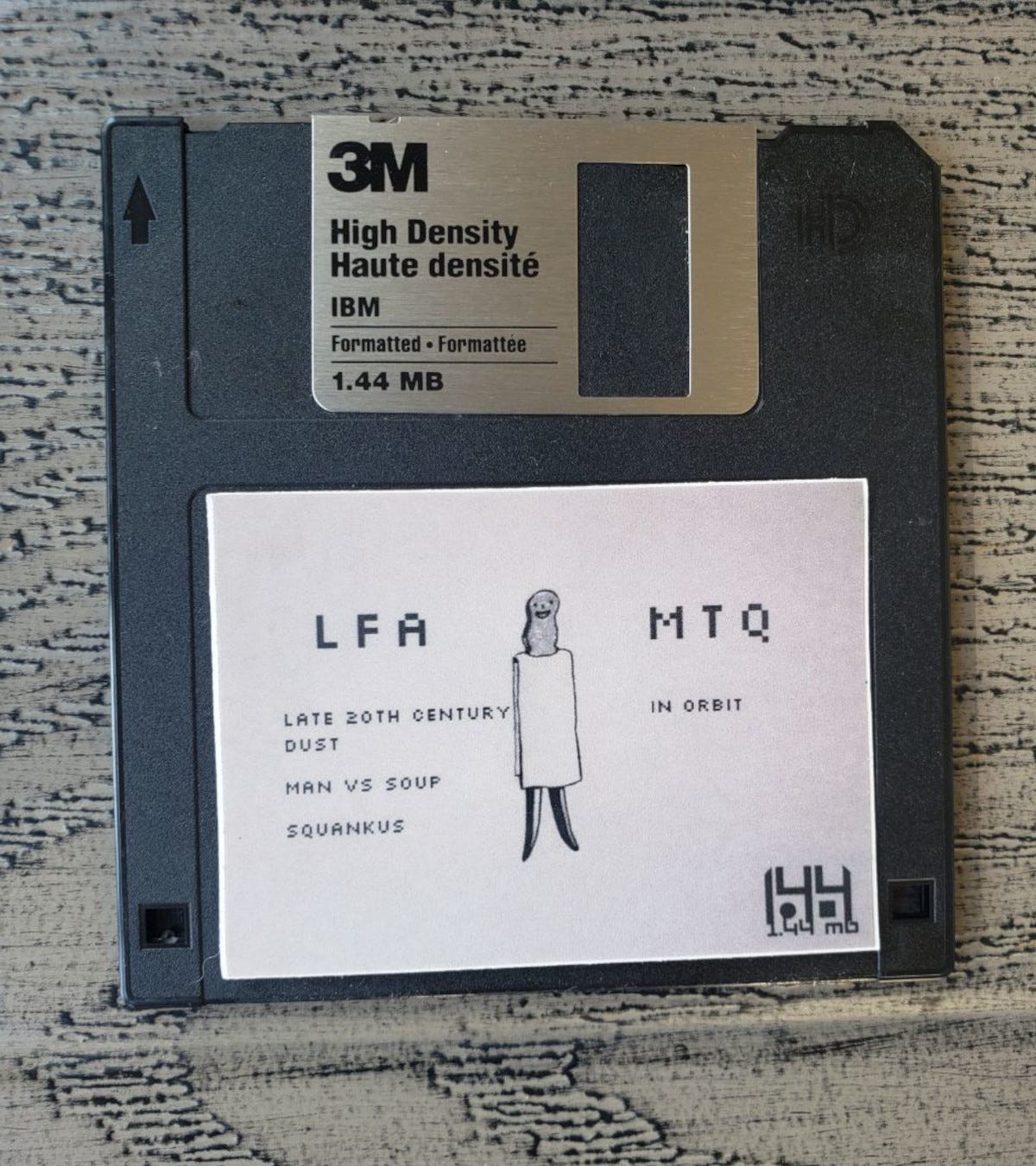
Release: Michael Talento Quartet/LFA - LFAMTQ
Breaking out of the jazz bucket
About the artists
LFA is a fusion group of somewhat flexible size influenced by alternative, math, and emo rock. For this album, they opted for guitar/drum duo of Alex Dragonetti/Sam Thomas. They play live in and around Philadelphia. For updates on them, check out Alex’s Instagram or listen to more of them on Bandcamp.
Michael Talento is a Saxophonist/Composer/Arranger born and raised in Philadelphia, Pennsylvania. During his career, Michael has been fortunate enough to study privately with a plethora of amazing musicians including: Norman Manno, Greg Riley, John Swana, Ben Schacter, Jerry Bergonzi, and Donny McCaslin. Michael currently resides in Brooklyn, New York, playing and teaching professionally. You can hear more of his music on his Bandcamp and read more about him on his website.
About LFAMTQ
“You’re going to put the album on a what?”
-Sam Thomas, drummer of LFA
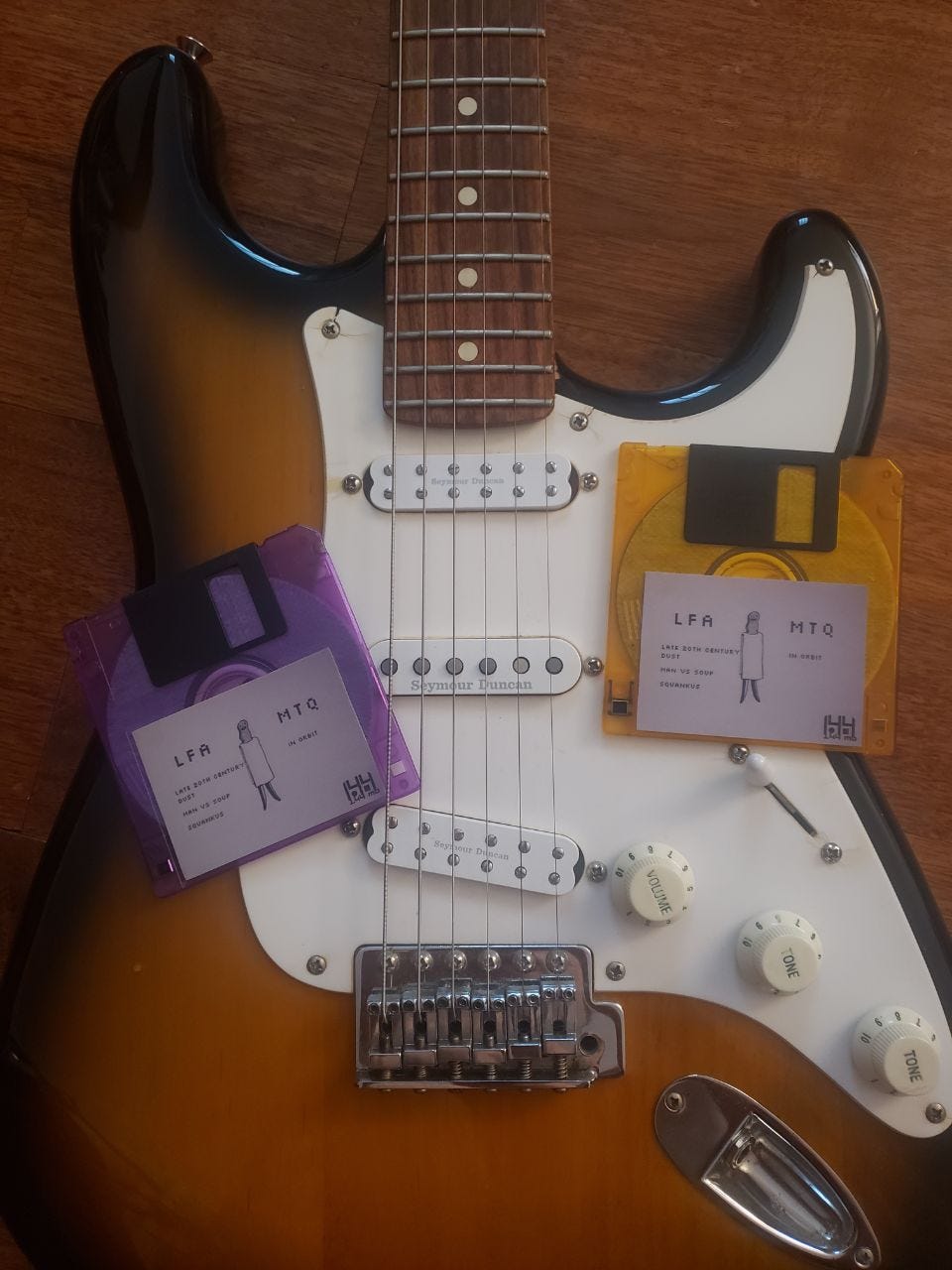
LFAMTQ is a split record between two northeast US jazz-fusion groups that draw on less common influences, pushing boundaries between fusion and rock as well as the conventions of those genres. Talento’s group releases fusion that has a clear alternative rock influence, while LFA releases rock with a jazz influence. In Orbit has been previously released on Talento’s album Sunrise, while LFA’s three tracks were written and recorded for the album. The album is available as download and floppy disk on our bandcamp!
Q&A with the artists
There’s definitely some genre-bending going on here. What are some of your influences on these songs?
Mike: For “In Orbit,” as well as the whole album Sunrise, I tried to blend my jazz influences with alternative rock and pop-punk, like Radiohead and Paramore, which turned out some very guitar-driven songs.
Alex: I’m all over the place, but I wanted to experiment with the limited ensemble size for this and my favorite guitar/drum duo is easily Hella. I also take a lot of inspiration from Roomrunner when it comes to writing riffs. It feels like their music lets the riff dictate the meter and not the other way around, and I leaned into that a lot for this project!
More on genre - do you think you’re more on the rock or jazz side of fusion, and what do you take from the other side?
Mike: Maybe a bit more on the rock side. For this project, I was extremely influenced by some artists who found a way to really blur that line like AlasNoAxis and Greg Ward. As soon as someone hears a saxophone, they tend to put the music in the jazz bucket, but I wanted the music to challenge that. The saxophone is an extremely vocal instrument, and for a lot of my songs I tried to treat it as a voice rather than a lead instrument. When approached that way, I think the music around it can’t help but lean more towards that rock side.
Alex: LFA is definitely more of a rock band when it comes to originals. The most present jazz influence in our music definitely comes from harmony. I think chords typical found in jazz (9ths, #11s, half diminished, etc) fit so well in emo and math rock, but they don’t appear too often. Plus, when that moment of color happens later in a song that’s otherwise very locked in to one key, it can hit way harder than it would in a repeating12/16/24/32 bar form.
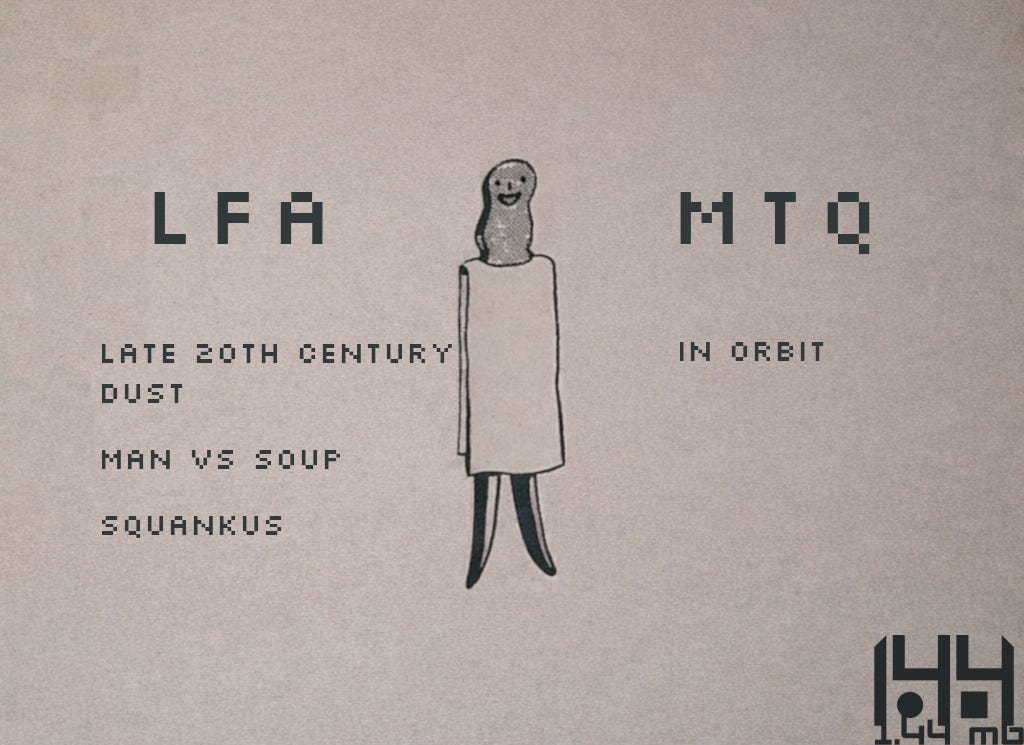
Is there any significance to this being on a floppy disk?
Alex: LFA is an acronym for “Literally F-ing Anything,” so something as out of left-field as a floppy disk feels right for our physical release. We also let the limits of the medium inform the music. The instrumentation is limited to guitar/drums or just guitar.
The tracks themselves were all written with the medium and it’s technical limitations in mind. Compositionally, it was an exercise in being concise (as well as saving space!). In “Late 20th Century Dust” and “Man Vs Soup,” there’s many phrases that end a little earlier than you might expect, which makes a really distinct and unique feel and sound. Sam absolutely kills it on drums. I had to throw meters at him that have no business existing, but he still managed to make it sound musical. I’m incredibly lucky I can call him for stuff like this.
In “Squankus,” the solo guitar piece, there’s no meter shenanigans, but the entire track is limited to one diatonic mode until the very end. Coming from a jazz background, I think that limitation hits the hardest, since mode mixture is the norm there, but I think adhering to that limitation makes the one moment of mode mixture a more striking splash of color.
How to listen
LFAMTQ is available for streaming and download on our bandcamp in its original and uncompressed form. It is also available for purchase on floppy disk.